

Freedom Always — Japan Series, Part Two
One moment you’re in the electric pulse of Tokyo…
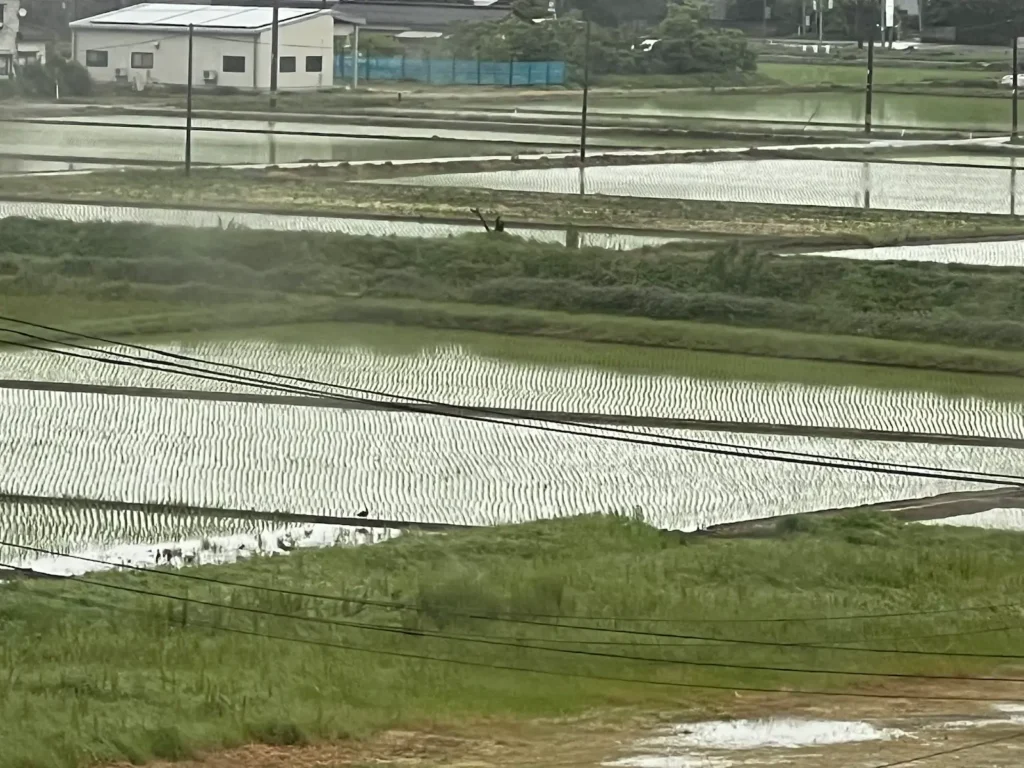
The bullet train — the iconic Shinkansen — has a way of making distance feel almost philosophical. One moment you’re in the electric pulse of Tokyo, and within a few hours, the cityscape dissolves into something quieter, greener, and deeply unhurried. Rolling fields of rice stretched to the horizon as we glided into Niigata Prefecture, and a soft, steady rain had begun to fall by the time we arrived in Tsubame. It didn’t slow us down for even a moment. If anything, it set the mood perfectly.
Tsubame is not a city that announces itself. It asks you to lean in.
Tucked into Niigata Prefecture, Tsubame — often paired with neighboring Sanjo City and referred to as the Tsubame-Sanjo region — has been famous for metal craftsmanship since the Edo period. When frequent floods destroyed crops in earlier centuries, farmers turned to metalwork as a secondary livelihood, and that quiet ingenuity grew into something extraordinary. Today, the cutlery used at the Nobel Prize banquet every year is produced right here in Tsubame-Sanjo — a fact that felt almost impossible to believe standing amid rice paddies and rain. Almost.
Settling In: A Night at a Traditional Onsen Ryokan
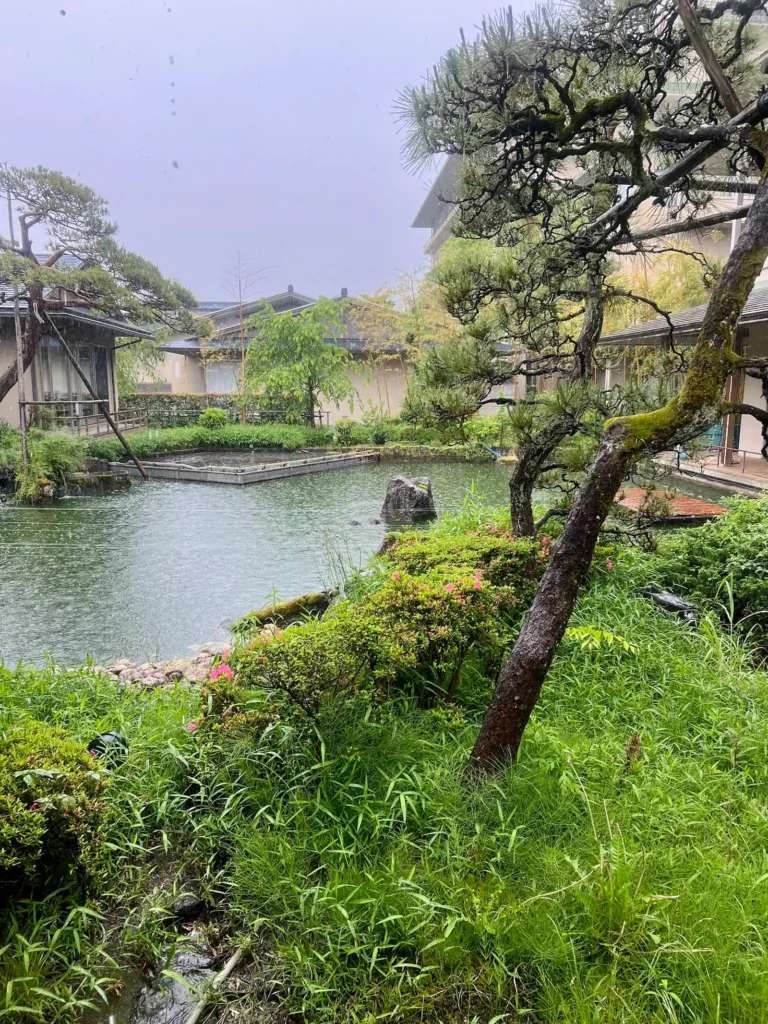
Our home in Tsubame was a traditional onsen ryokan — and stepping through its doors felt like stepping into more than a thousand years of Japanese hospitality. The ryokan traces its origins all the way back to the Nara period, around the 8th century, when Buddhist monks established simple rest houses for pilgrims and traveling officials. Over the centuries those humble shelters evolved into something far more refined — and by the Edo period, when travel flourished across Japan, the ryokan became an essential part of the journey itself. It’s worth noting that ryokans span a wide spectrum — from simple, no-frills inns that are perfectly comfortable and wonderfully authentic, all the way to deeply luxurious retreats offering multi-course kaiseki dinners, private onsen baths, and impeccable omotenashi — the Japanese art of wholehearted hospitality. Know what you’re booking before you arrive, and choose the experience that fits your travel style. Whichever level you choose, the essentials remain: tatami floors, the soft murmur of water, a yukata folded at the foot of your bed. The ritual of the onsen — sinking into mineral-rich waters as the rain fell outside — was the proper way to mark the transition from the city we’d left behind. Slow travel isn’t just a philosophy. Sometimes it’s a hot bath and the sound of rain on a Japanese garden.
Getting Your Hands into It: Tsuchime Copper Hammering
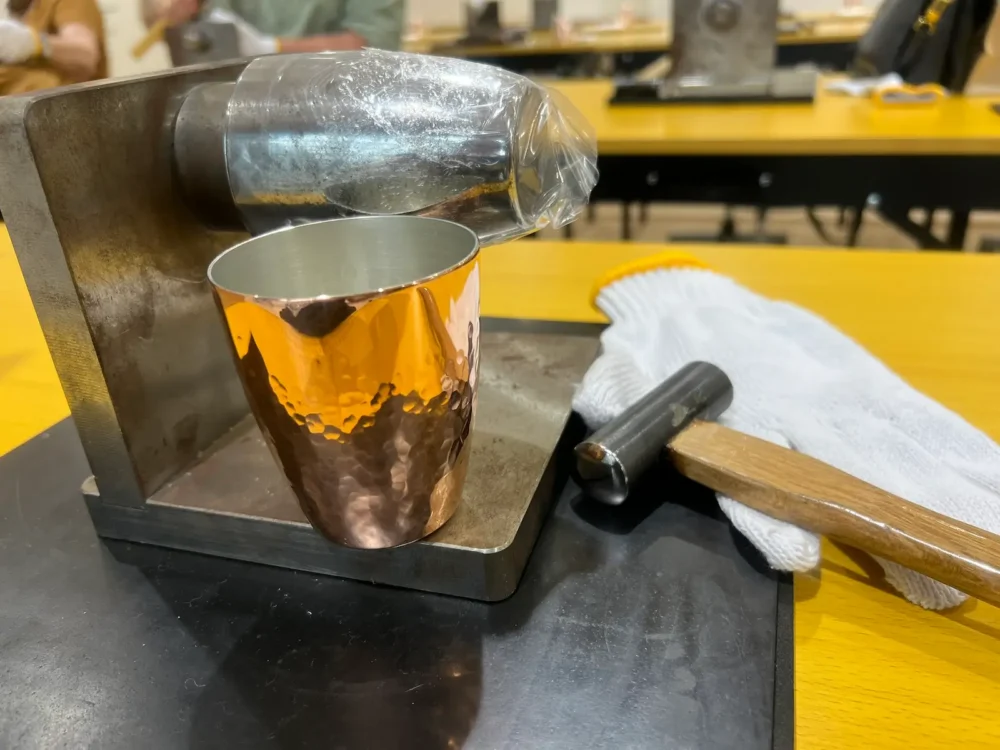
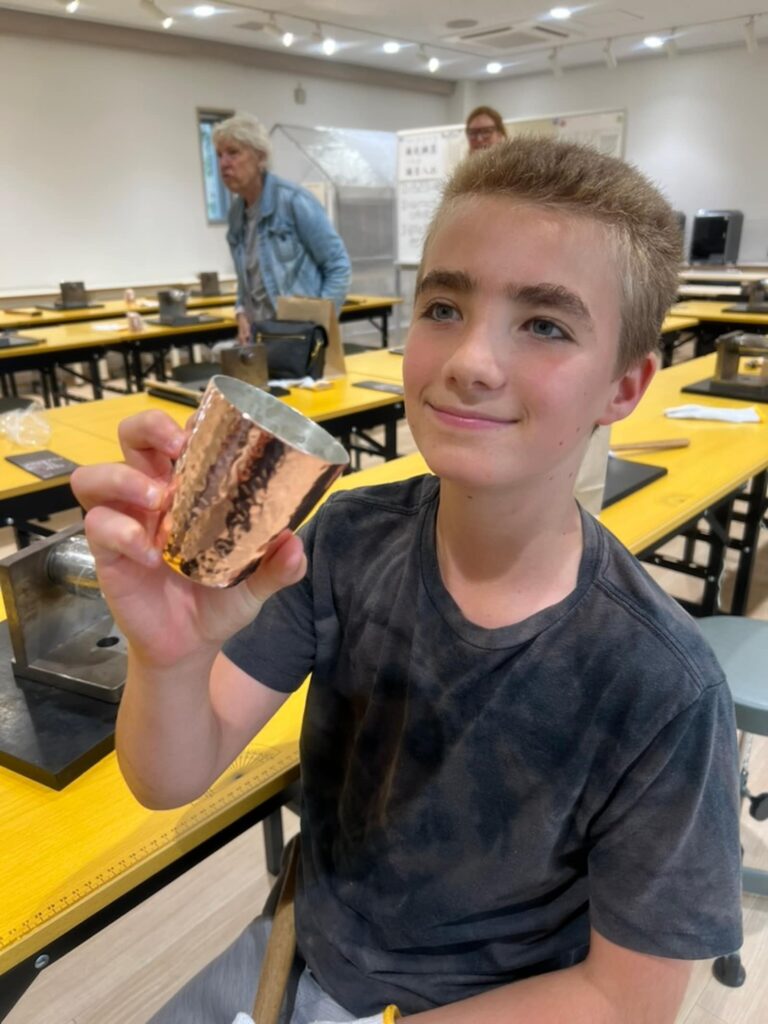
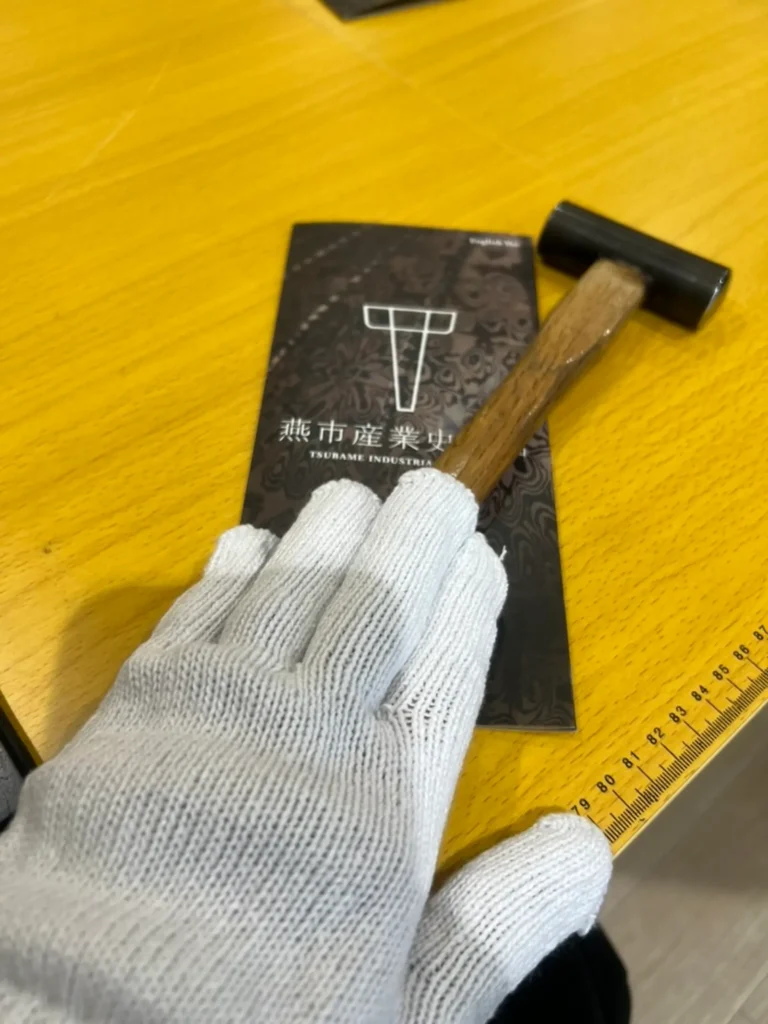
If I had to choose a single experience that captured the soul of Tsubame, it would be this one. We were introduced to tsuchime — the traditional technique of hammered metalwork — and handed the tools to try it ourselves. A copper cup, a hammer, and a short window of time to leave our mark.
The art form, known as Tsubame-tsuiki, traces back to the 18th century, when craftsmen first brought copper-working technology to the region and began hand-hammering metal into forms of rare beauty. Generations of artisans followed, each piece retaining the beautiful uniqueness of the handmade — reflecting the skill and personality of the individual who shaped it.
We were not master artisans. We were enthusiastic visitors with hammers. But there is something quietly revelatory about the act of making something with your hands — the repetition of it, the meditative focus required, the way time disappears. My copper cup went home with my son. I wanted him to have something I had touched and shaped, however imperfectly — a small, handmade thing that carried a little of that afternoon in Tsubame with it. If you find a tsuchime experience during your time in the region, don’t skip it — it’s one of those quiet moments that stays with you long after you’ve come home.
I’ve also curated a collection of Japanese-made treasures you can bring home without the jet lag — browse my Japan Brought Home collection.
Two and a Half Centuries of Sake: A Visit to Imayo Tsukasa
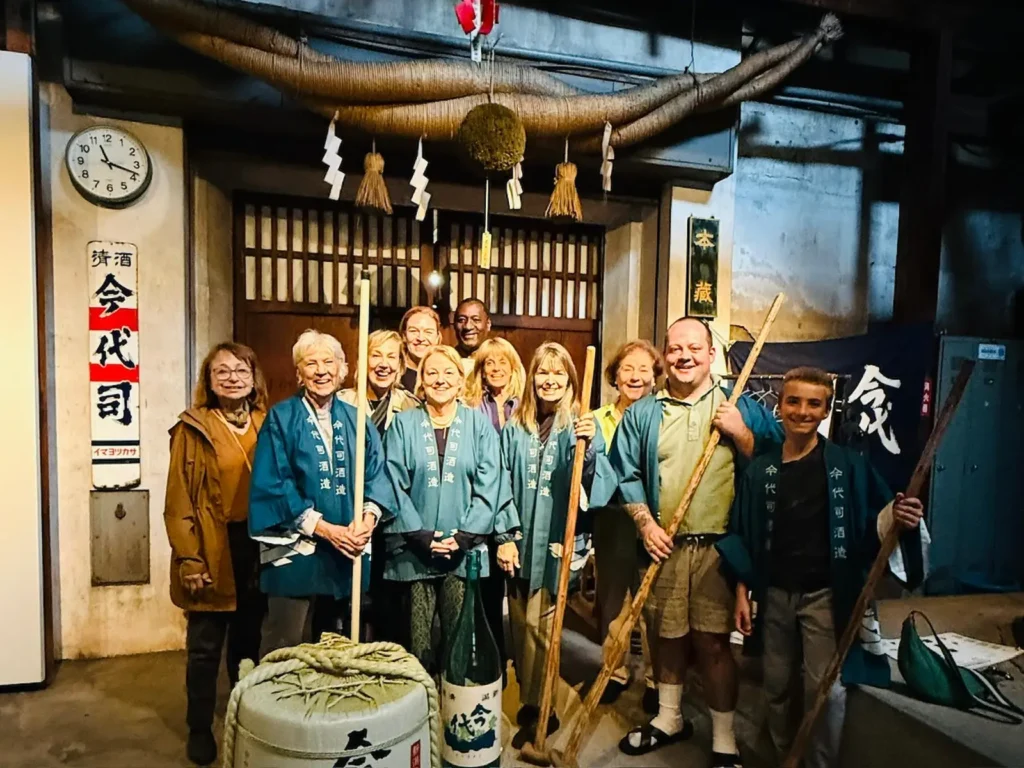
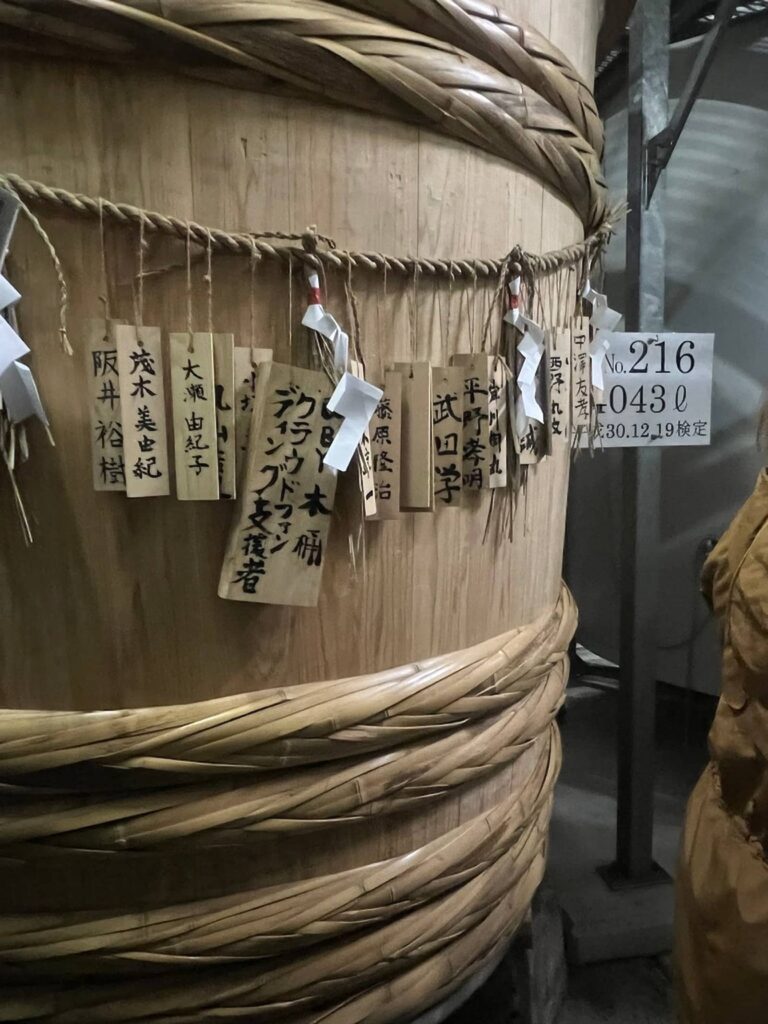
From the workshop, we made our way to Imayo Tsukasa, a sake brewery founded in 1767 — more than 250 years of continuous production in the heart of Niigata. There are places where time feels genuinely layered, where the walls themselves seem to hold memory, and this was one of them. We learned about the koji mold, the careful temperature management, the seasonal rhythms that govern sake production, and the deep local pride that keeps these traditions alive generation after generation. Tasting sake in the place where it was born, with the rain still tapping against old wooden eaves, was not something I’ll forget.
Blades Worth Bringing Home: A Visit to Tadafusa
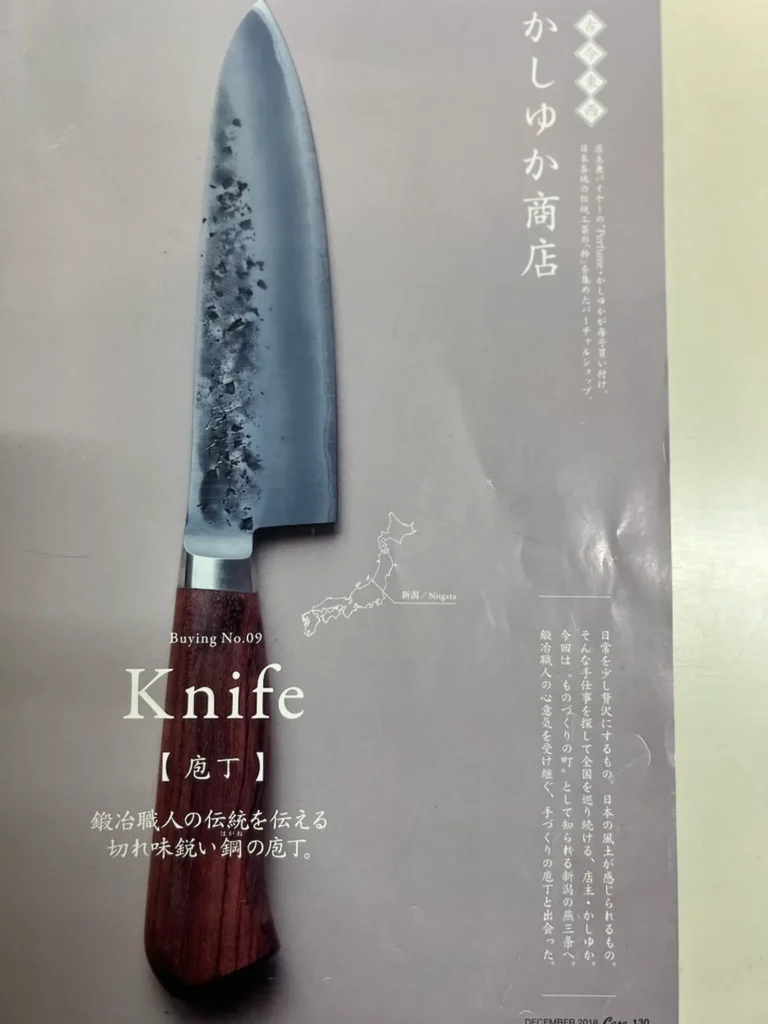
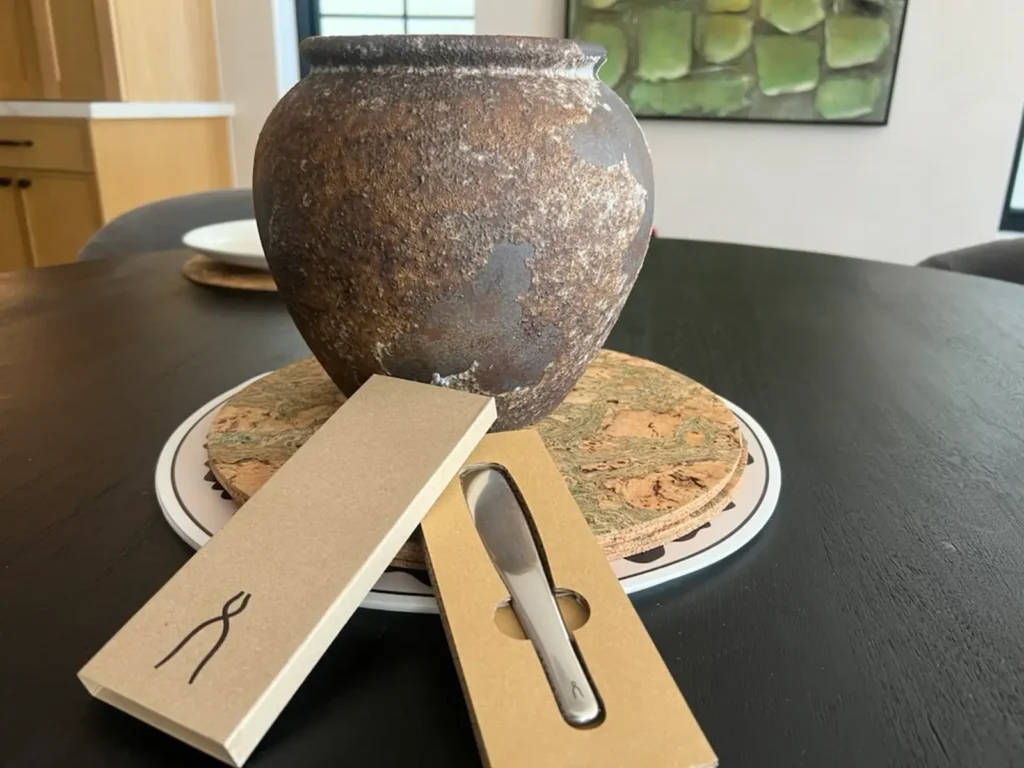
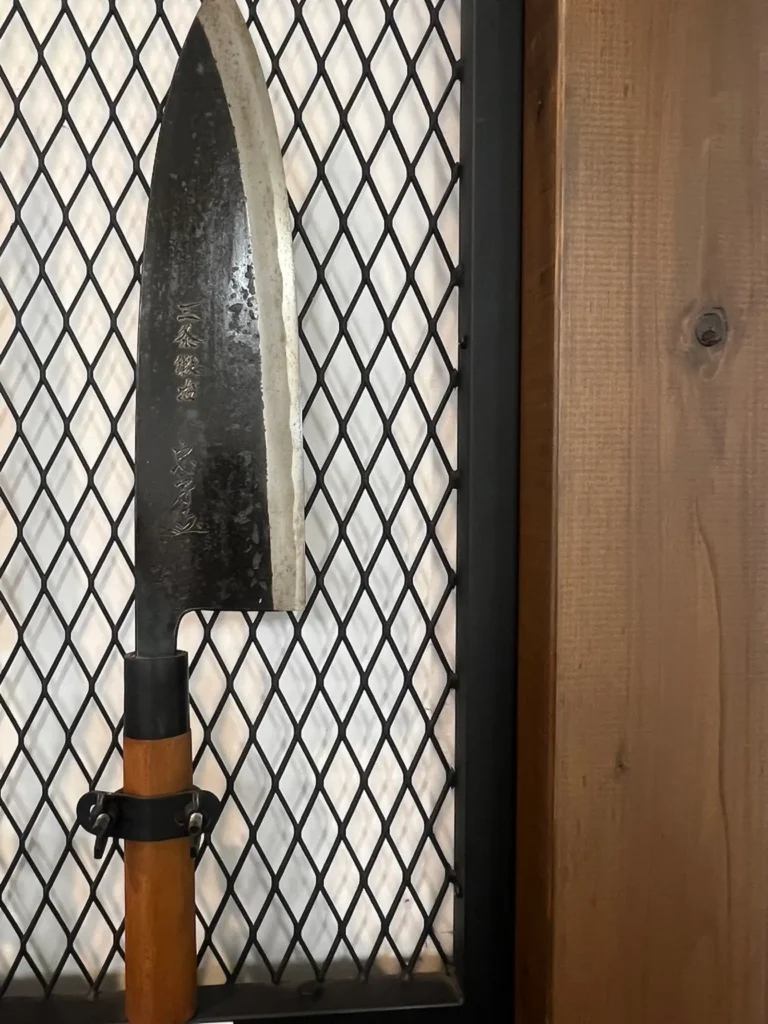
No visit to the Tsubame-Sanjo region would be complete without a stop at one of its legendary knife workshops. We visited Tadafusa, a Tsubame-area knife maker whose blades are the kind of thing serious cooks quietly obsess over — forged with the same unbroken tradition that has made this region synonymous with exceptional metalcraft for centuries. It is said that there is virtually no metalware that cannot be made in Tsubame-Sanjo, and standing in Tadafusa’s workshop, watching craftspeople work with the focused precision of people who have inherited something worth protecting, I believed every word of it.
We were walked through the entire process — from raw material to finished blade — and the craftsmanship was staggering. I came home with a butter knife. Simple in design. Perfect weight in the hand. Every time I use it, I think about the hands that made it and the region that shaped those hands. I only wish I’d bought more for gifts.
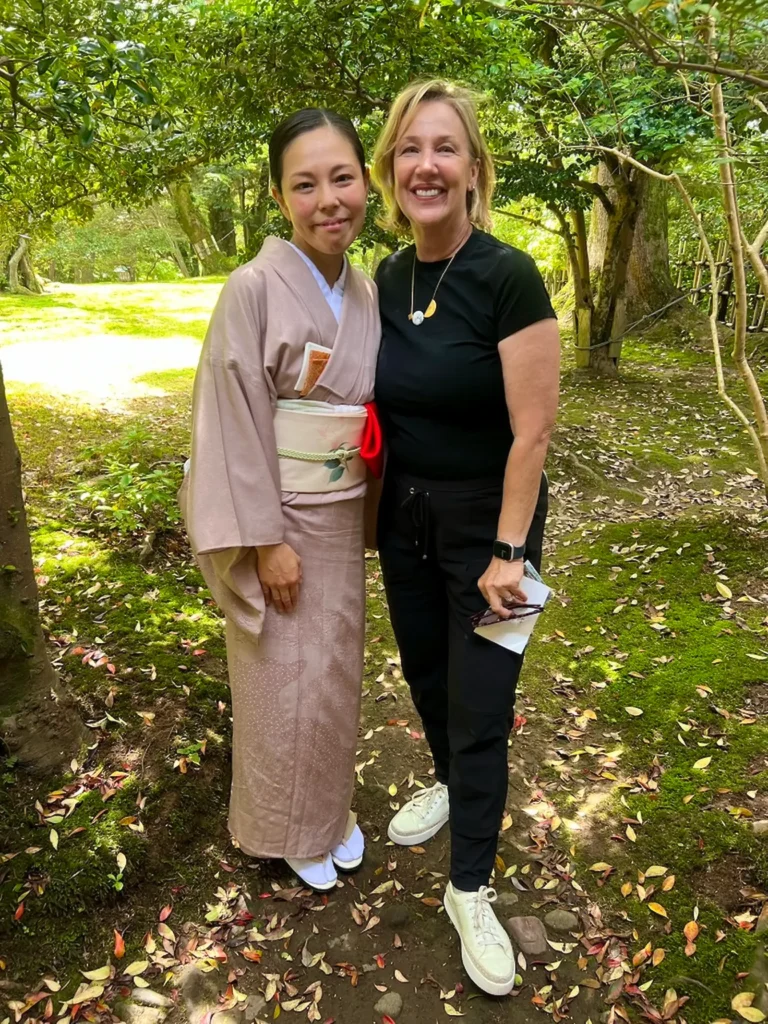
A Stroll Through History: Takada Castle Park
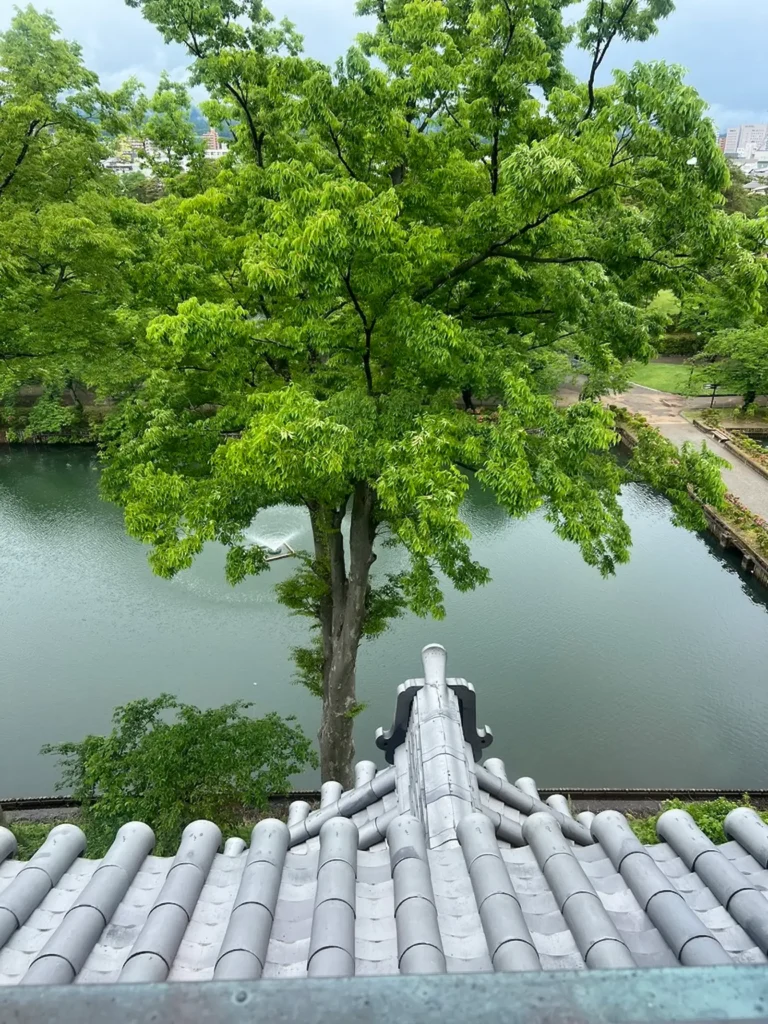
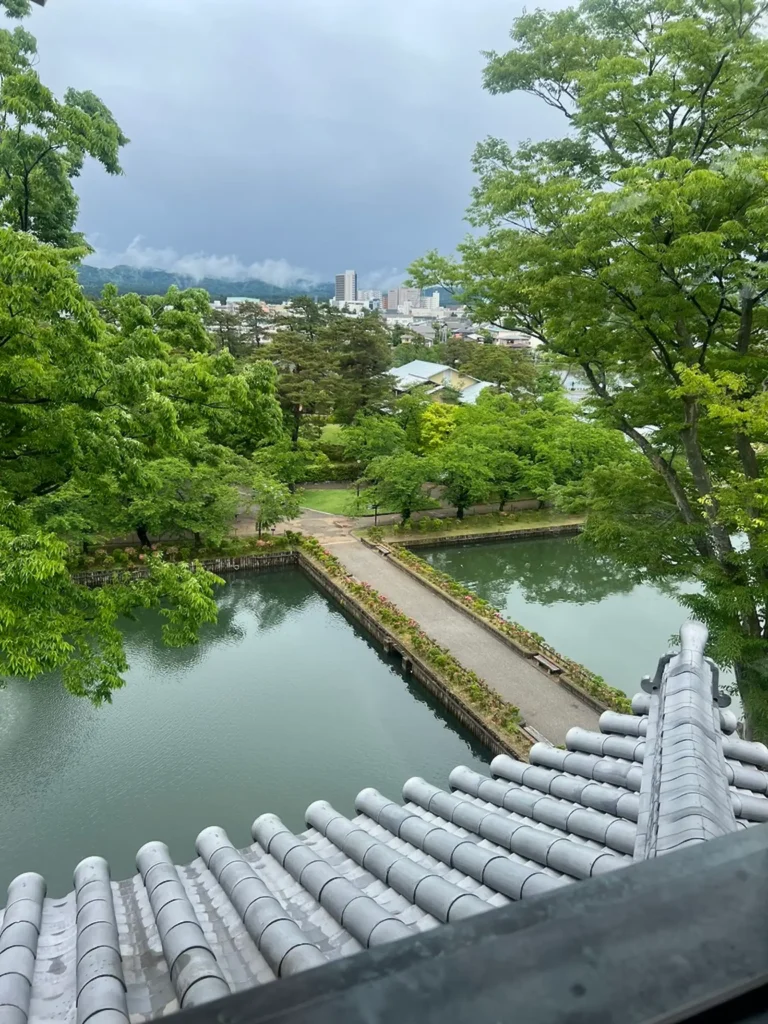
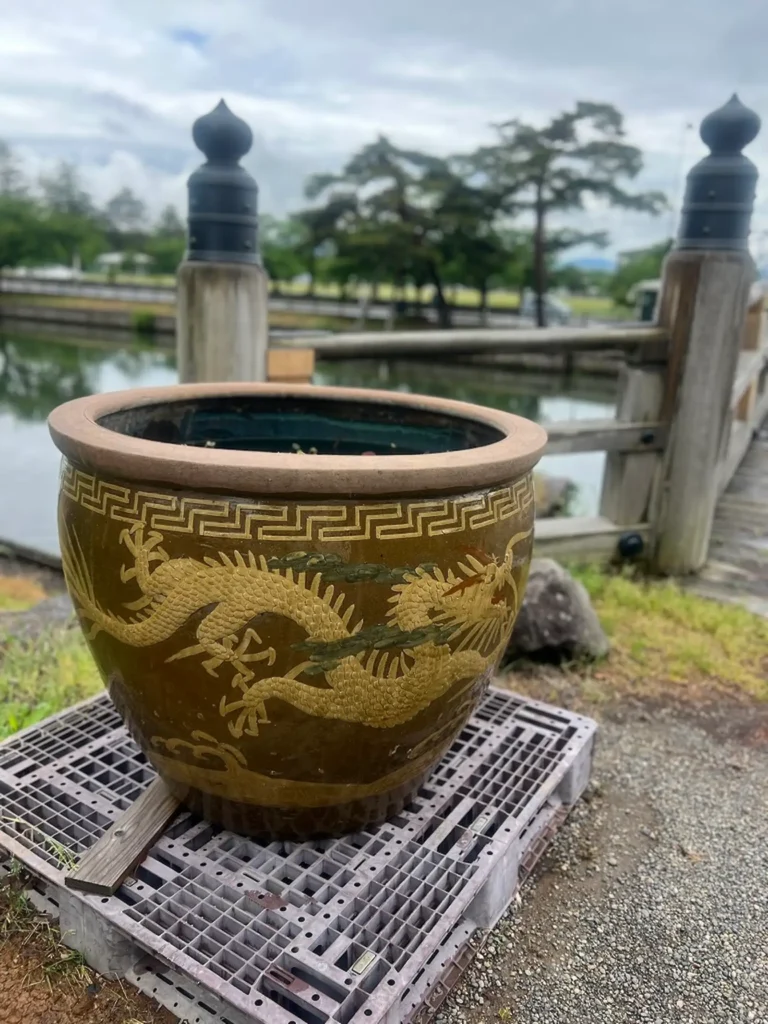
A 45-minute bus ride from Tsubame brought us to Takada Castle Park in Joetsu — and it was exactly the kind of discovery that slow travel makes possible. The park is built around the remnants of a significant Edo-period fortress, offering a lush landscape that shifts dramatically with the seasons. At its heart stands the elegant triple-turret structure of Takada Castle, reflected in the still waters of its surrounding moat — a place that carries the quiet authority of centuries. We strolled the grounds slowly, the rain having eased into a fine mist by now. There was no urgency to any of it. That is the particular gift of a place like Tsubame — it teaches you, gently but firmly, that there is no rush.

What Tsubame Gave Me
Tokyo was electric. Tokyo was necessary. But Tsubame was something else entirely — a place that reminded me why I travel the way I do. Not to check boxes, but to understand how people live, what they make, what they’ve chosen to preserve. Tsubame is a city where the past and present coexist — where visitors are invited to engage directly with the artisans keeping centuries-old traditions alive.
The rain that greeted us when we arrived felt appropriate. In Japan, I learned, rain isn’t an inconvenience. It’s part of the landscape. Part of the story.
Next stop: Kanazawa.
Marie Leiter is the voice behind Freedom Always Blog – a slow traveler with a passion for hidden gemms, authentic experiences, and life well-lived between two coasts.
2 thoughts on “Tsubame Sanjo Travel Guide| Artisan Japan Off the Beaten Path”
Wonderful story of your travels…inspirational and informative.
The trip has stayed with me. I want to return to Japan.