

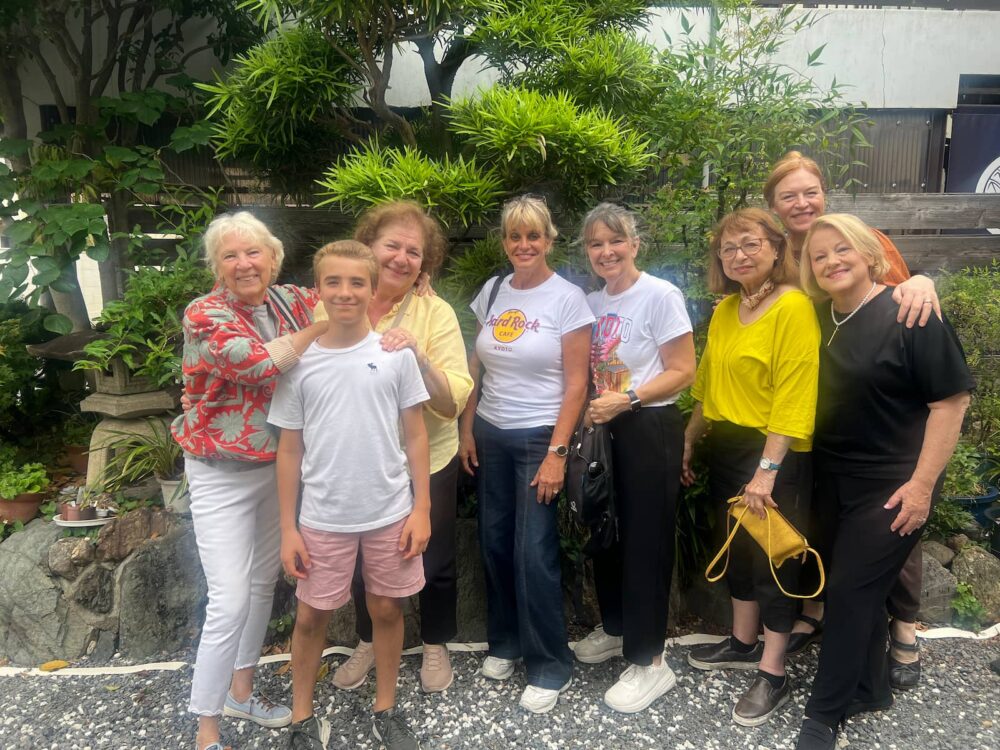
Freedom Always — Japan Series, Part Three
The Shinkansen has a way of making every arrival feel like a reveal. One moment you’re watching scenery blur past the window, and the next, you step onto a platform in a city that feels like it has been quietly waiting for you to discover it. That is Kanazawa — unhurried, cultured, and layered with centuries of artisan tradition. Where Tokyo dazzles and Tsubame humbles, Kanazawa simply enchants.
I’ve always said that where I rest my head at night matters. It sets the tone for everything that follows, and in Kanazawa, we got it exactly right.
Where We Rested Our Heads: The Hotel Sanraku Kanazawa
The Hotel Sanraku Kanazawa was, without question, our favorite hotel of the entire Japan trip — and that is saying something. From the moment you step inside, the aesthetics speak for themselves: a stunning six-story waterfall courtyard, rooms appointed with byobu-style headboards that weave traditional Kanazawa craft into a decidedly modern setting, and an atmosphere of quiet elegance that never tips into pretension. The hotel sits in the heart of Kanazawa, with the city’s main attractions within easy walking distance.
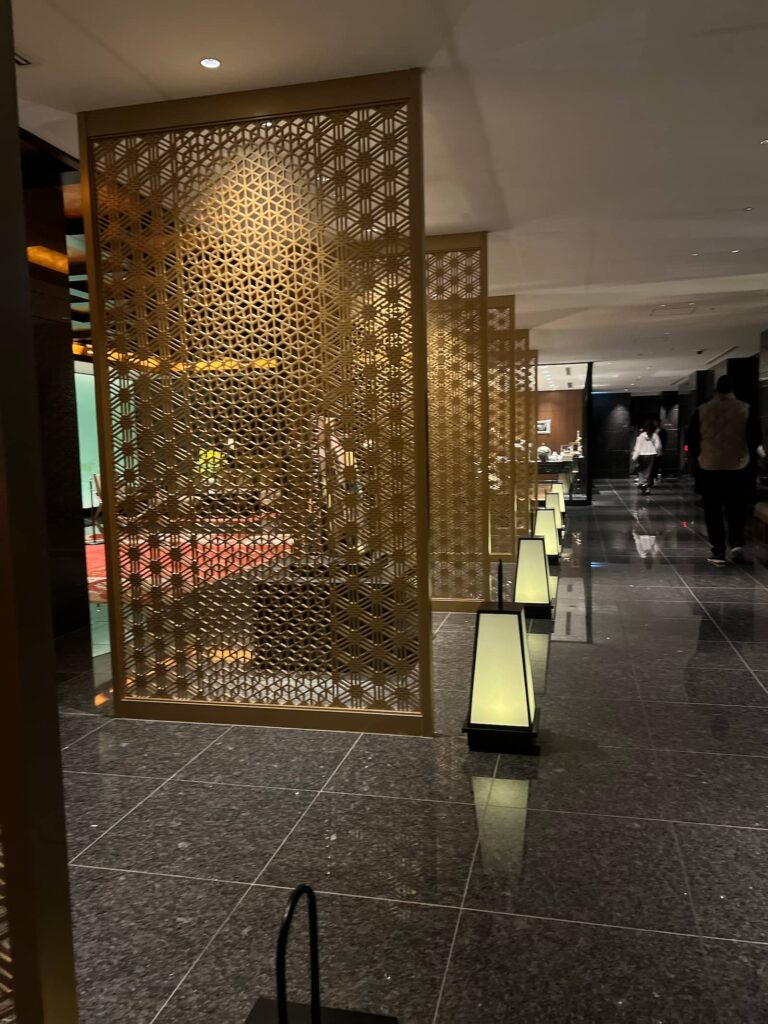
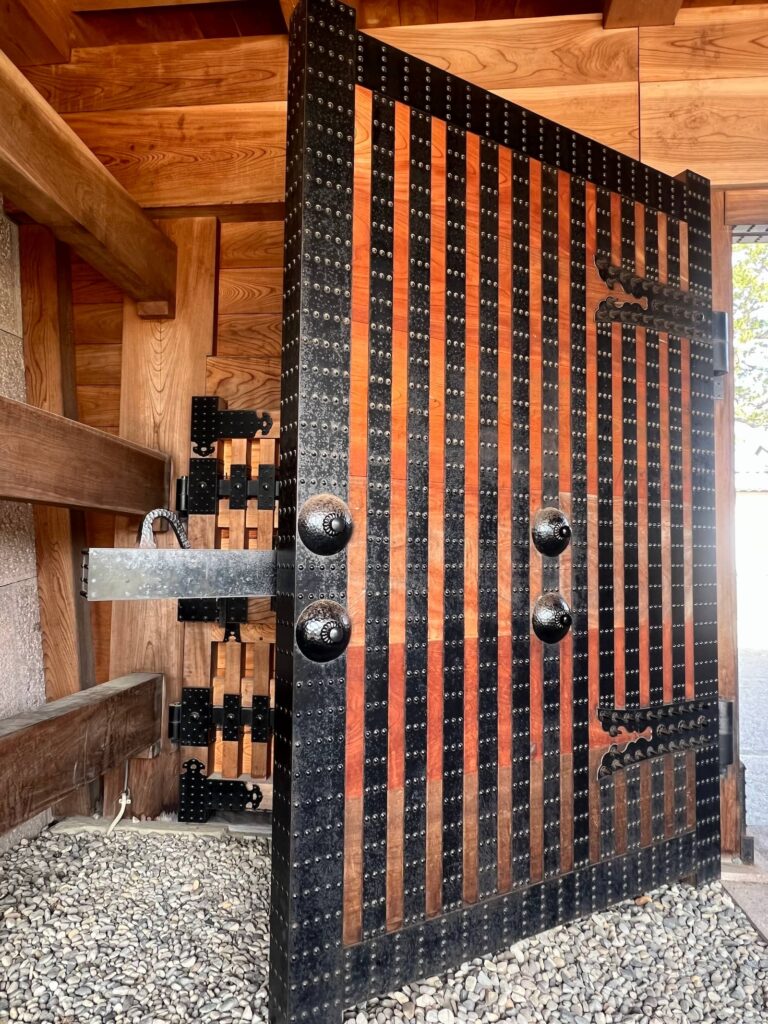
And then there was breakfast. More than 60 items — Japanese and Western — spread across a live kitchen where chefs prepared tempura, sushi, and steamed dishes right in front of you. Traditional Japanese dishes, freshly made, alongside everything else your morning appetite could possibly want. We were not in a rush. We didn’t need to be. It was one of those rare breakfasts that you think about long after the trip is over.
Location sealed it. The hotel sources its restaurant ingredients directly from the Omicho Market nearby — which meant we were, quite literally, two minutes from one of Japan’s most extraordinary food markets. More on that in a moment.
Kanazawa’s Kitchen: Omicho Market
If there is one experience in Kanazawa that I would make non-negotiable, it is Omicho Market — and arriving to it from our hotel in under two minutes made it feel like our own private discovery every single morning.
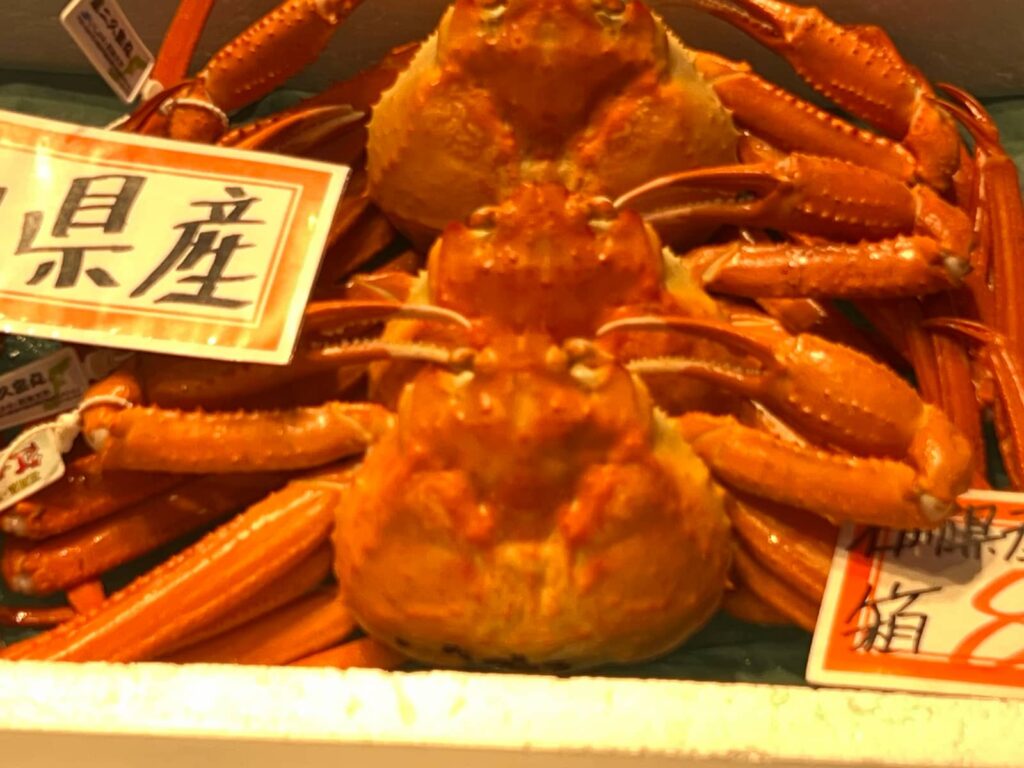
Omicho Market has been Kanazawa’s largest fresh food market since the Edo period, a lively and colorful network of covered streets lined by around 200 shops and stalls. Known affectionately as “The Kitchen of Kanazawa,” it has been deeply rooted in local life for over 300 years. Fish, shellfish, and locally harvested vegetables line the stalls, with fresh catches arriving each morning directly from the Sea of Japan — and what you encounter on any given day is entirely that morning’s surprise.
The sensory experience is overwhelming in the best possible way. Color, sound, the sharp salt air of fresh seafood, vendors calling out the morning’s catch, craftspeople preparing fish right at the counter. It is the kind of place that makes you want to slow down and simply take it all in.
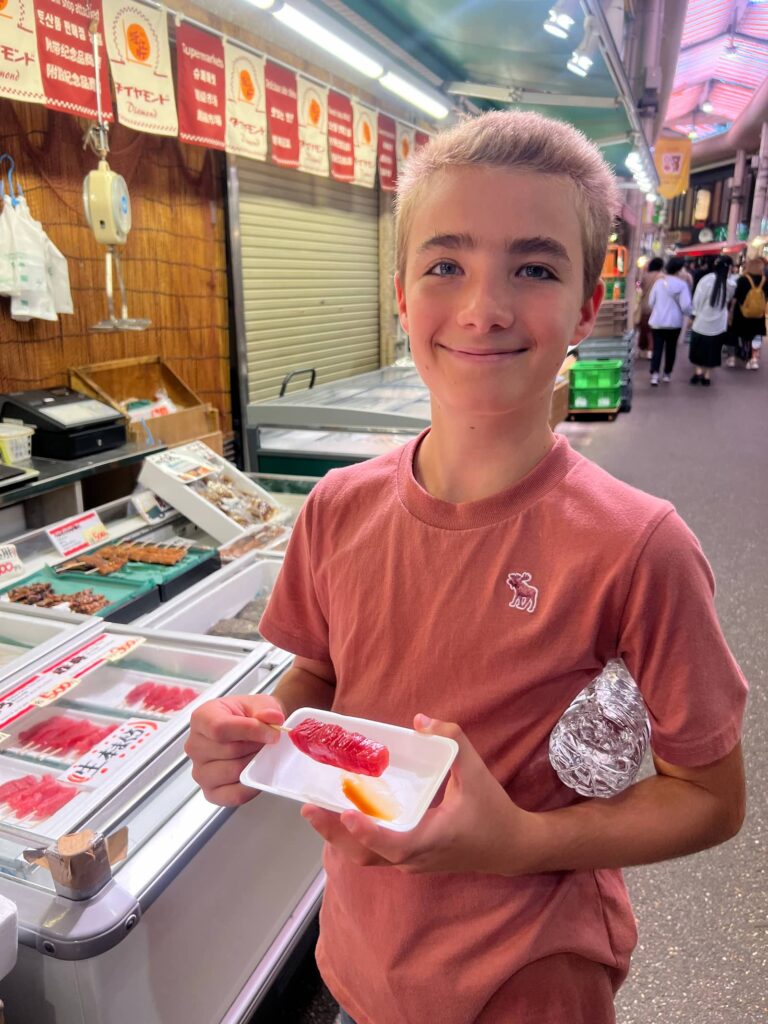
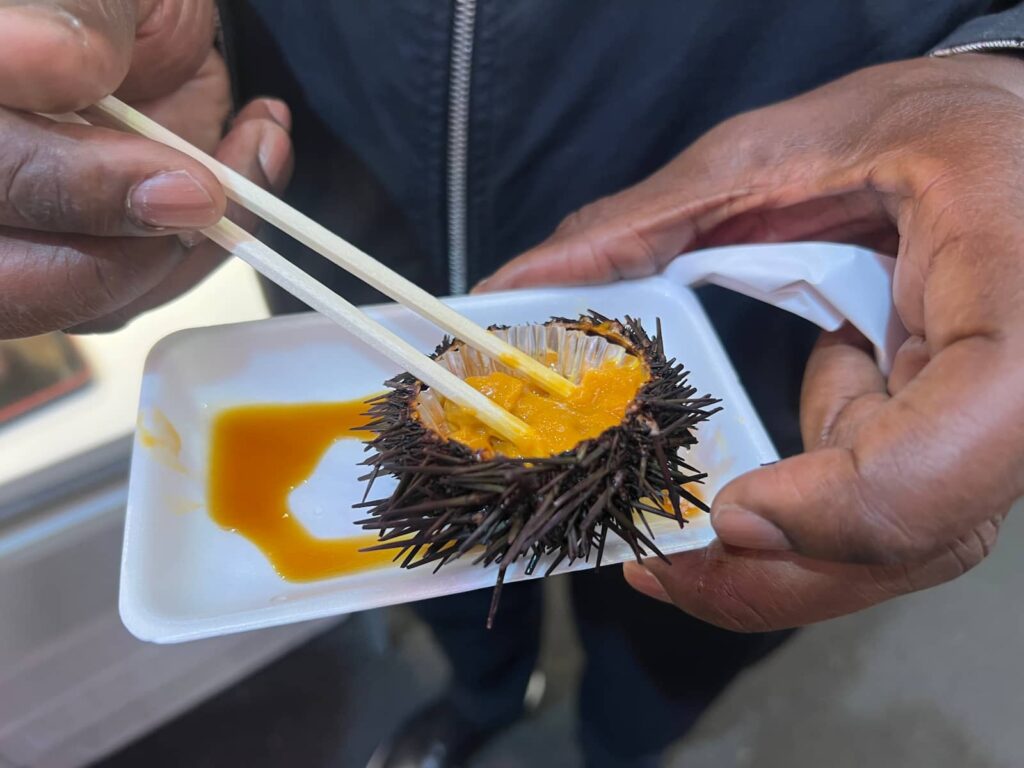
My husband and grandson were in heaven. Sushi every single day — and not once did they repeat themselves. The market offers everything from sea urchin (uni) to sweet shrimp to the prized nodoguro, or blackthroat seaperch, which Kanazawa is particularly famous for. [See the photos: my husband with his uni, and Sebastian with what he declared — with complete conviction — the best tuna he has ever had in his life.] As for me, there is truly something for everyone here, and then some.
Gilded Memories: The Gold Leaf Experience
Kanazawa produces over 99 percent of Japan’s gold leaf — a tradition that dates back to at least the 17th century, when the craft first flourished under the patronage of the powerful Maeda clan. Originally used to coat temples and shrines in gilded glory, gold leaf gradually evolved into an art form all its own, finding its way into lacquerware, kimono, and eventually into the everyday life of the city.
We participated in a gold leaf workshop, and it was one of those experiences that stays with you long after you’ve returned home. Each traveler selected a design for their lacquer box, and with the guidance of patient, skilled instructors, we applied the impossibly thin sheets of gold leaf — a process that requires a breath held just so, and a steadiness of hand that you discover very quickly you may or may not possess. What I didn’t anticipate was watching my husband and grandson become so completely absorbed in it. There they were, side by side, heads bent over their lacquer boxes, utterly focused — the noise of the world simply gone. I don’t think either of them said a word for a good stretch of time. My husband, in particular, surprised me. To see him give himself over to something so delicate, so deliberate, so entirely outside his everyday world — it was genuinely beautiful. Those are the moments slow travel hands you when you least expect them. The result for each of us is uniquely, imperfectly, beautifully ours.
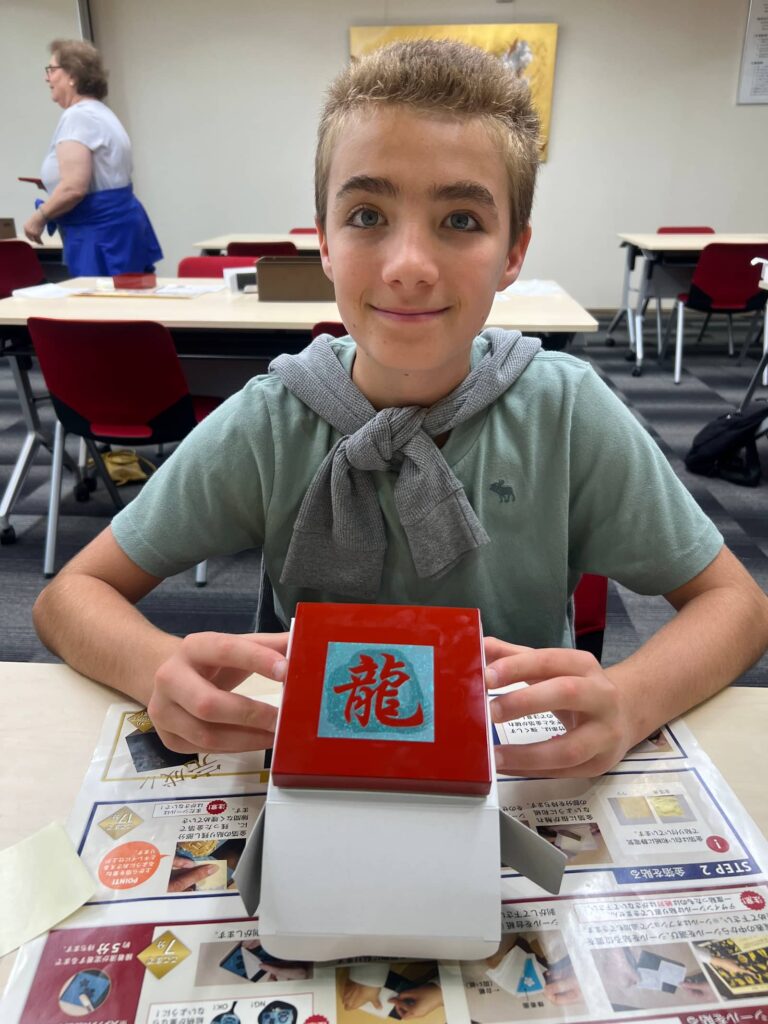
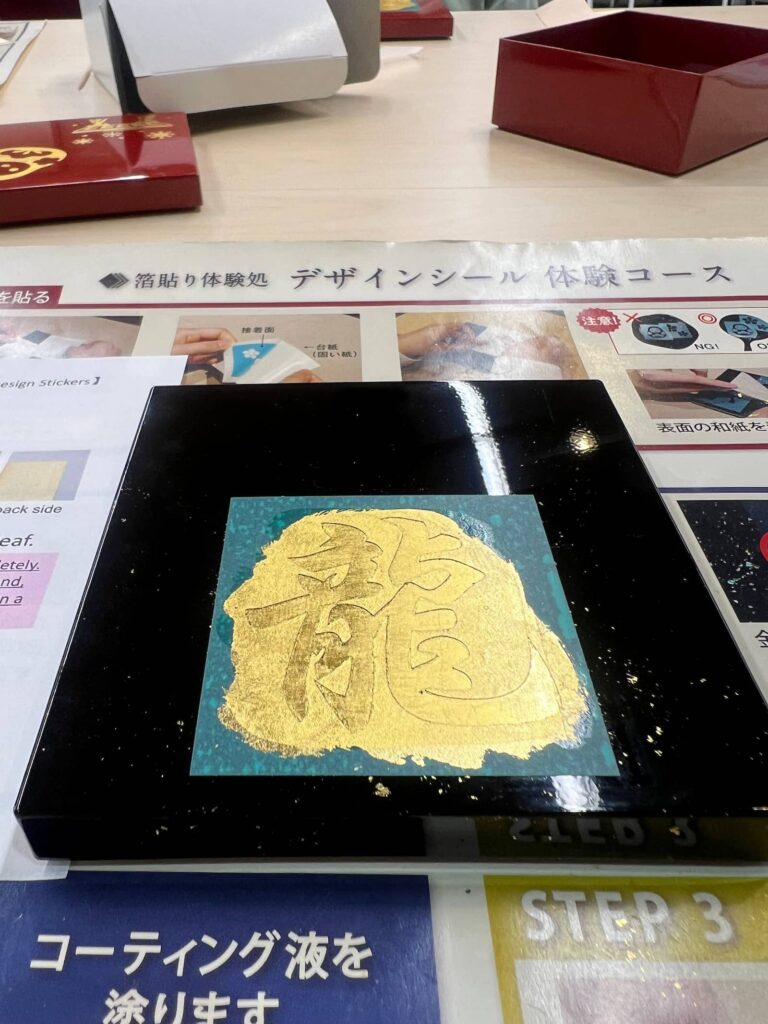
Our lacquer boxes now sit at home, and every time I look at mine, I’m back in that workshop in Kanazawa, gold leaf practically floating off the table. Do not rush out when the workshop is over. The shop is worth lingering in — full of gilded folding screens, gold-flecked cosmetics, tableware, and glimmering edible sweets, with even the bathrooms resplendent in gold leaf and platinum foil. Budget time for it. You’ll want it.
An Afternoon in Higashi Chaya District: Where Geisha Culture Meets Gold
A ten-minute walk from the Hotel Sanraku brought us to one of Kanazawa’s most quietly extraordinary neighborhoods — the Higashi Chaya District, the largest and most celebrated of the city’s three historic geisha quarters.
Established in 1820, when geisha houses scattered across central Kanazawa were consolidated into three designated districts, Higashi Chaya has been a place of refined entertainment and artistic tradition for over two centuries. Geisha — whose name literally means “persons of the arts” — are female Japanese entertainers who perform dances and play traditional Japanese instruments, and they entertained the wealthy nobles and merchants of the Edo period here in the chaya, or teahouses, that line these beautifully preserved streets.
Along with Kyoto’s Gion and Kanazawa’s Kazuemachi, Higashi Chaya has been designated as a Japanese cultural asset — a distinction shared by no other geisha districts in the country. Walking through it, you understand why. The wooden teahouses with their distinctive latticed bay windows — called kimusuko — are largely unchanged from the period in which they were built. During the Edo period, two-story buildings were prohibited except for geisha houses, making their elegant, elevated silhouettes all the more striking against the streetscape. Even today, five operating ochaya houses remain in the district, and if you’re fortunate enough to be there in the evening, you may catch a glimpse of a geisha on her way to an appointment — a moment that feels genuinely suspended in time.

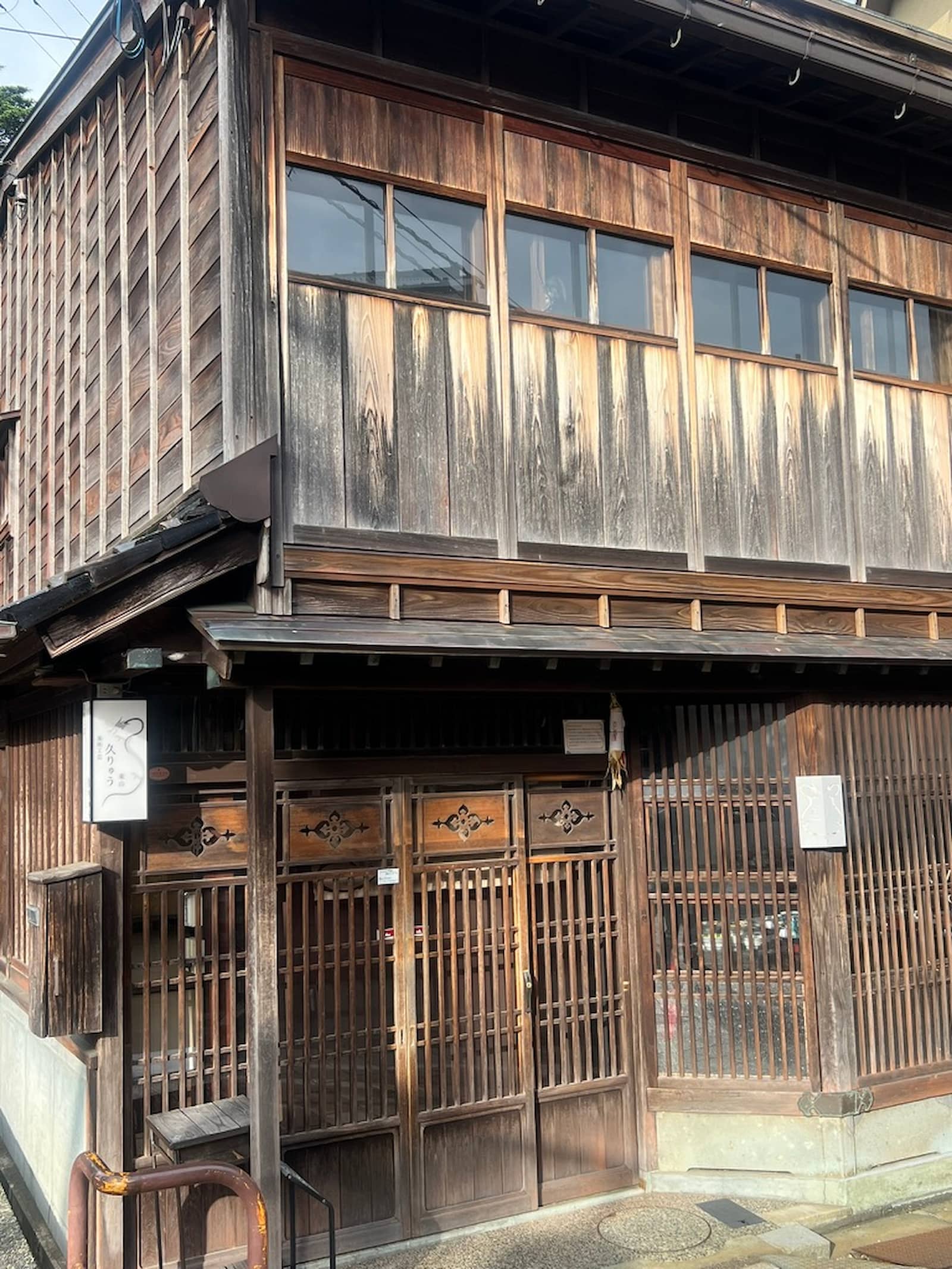
For visitors, two teahouses are open to the public. The Shima Teahouse has been preserved as a museum, its rooms still arranged as they would have been during performances — instruments, lacquerware, elaborate hair ornaments, and the intimate details of a geisha’s world all quietly on display. At the Kaikaro Teahouse, still an operating venue, you can step inside for a modest fee and take in a room where an entire staircase is covered in red lacquer, with traditional tatami rooms where geisha still perform in the evenings.
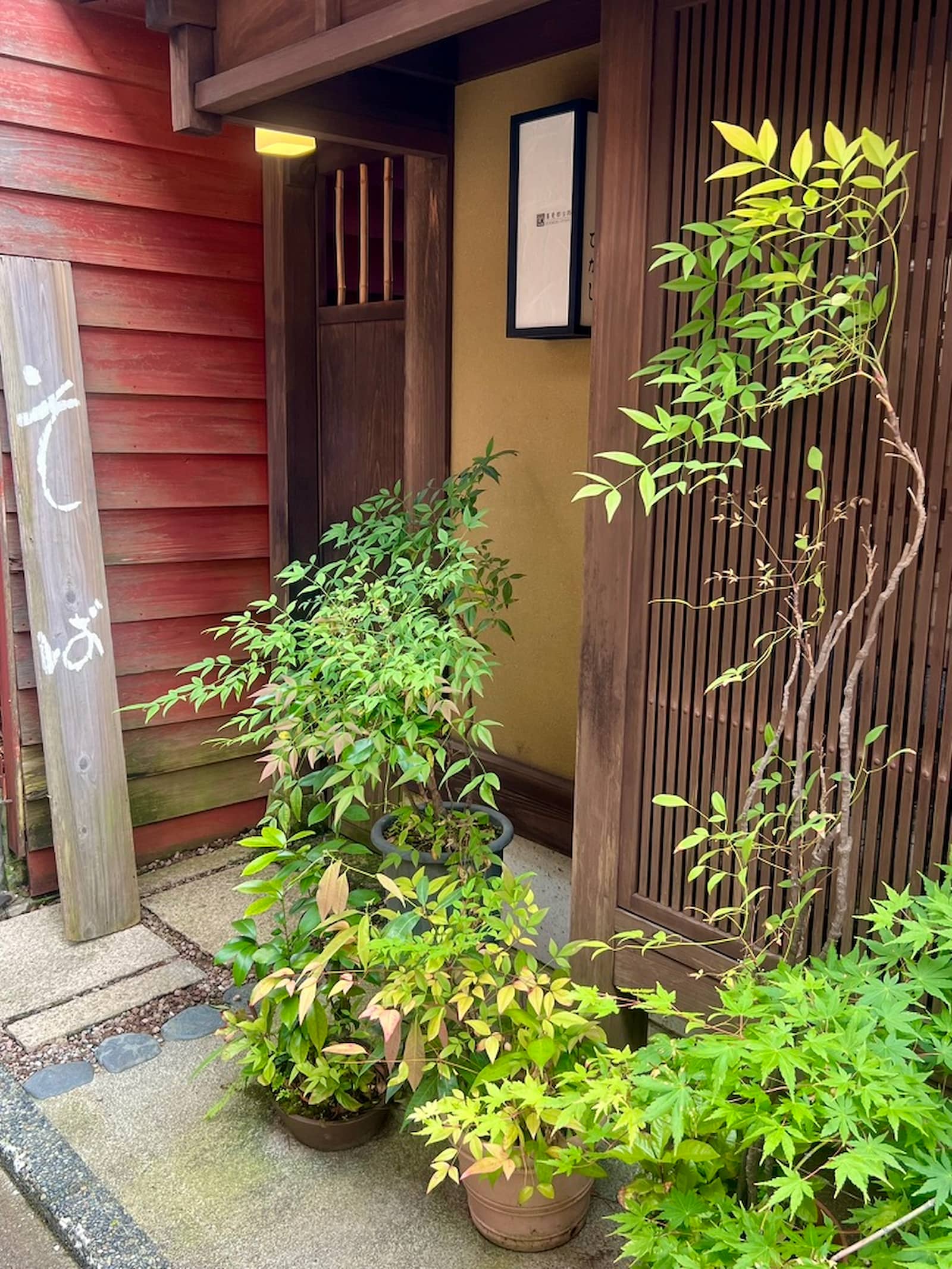
Beyond the teahouses, the district is a genuine pleasure to simply wander. Former geisha houses have been converted into cafes, food shops, and artisan boutiques, and the offerings reflect Kanazawa’s craft culture at every turn. Shops throughout the district carry gold-leaf-adorned items — cosmetics, jewelry, decorative pieces, and edible gold leaf in forms you wouldn’t expect. The gold-leaf ice cream, with its sheet of gleaming gold draped over the cone, is an experience unto itself — and yes, it tastes as good as it looks. Browse slowly here. The jewelry and craft shops reward patience, and the pieces you’ll find make for gifts that carry real meaning — not souvenirs, but objects with a story behind them.
Higashi Chaya is the kind of neighborhood that asks you to put your phone away for a moment and simply be present in it. We were glad we did.
Kenrokuen Garden, Kanazawa Castle & a Tea Ceremony to Remember
From Higashi Chaya, we walked to Kenrokuen Garden — and nothing quite prepares you for it.
Kenrokuen is justifiably ranked as one of Japan’s three most beautiful gardens, alongside Mito’s Kairakuen and Okayama’s Korakuen. Its name literally means “Garden of the Six Sublimities” — referring to spaciousness, seclusion, artificiality, antiquity, abundant water, and broad views, which according to classical Chinese landscape theory are the six essential attributes of a perfect garden. Developed from the 1620s to the 1840s by the Maeda clan — the powerful feudal lords who ruled the Kaga Domain — the garden was eventually opened to the public and later designated a National Site of Special Scenic Beauty.
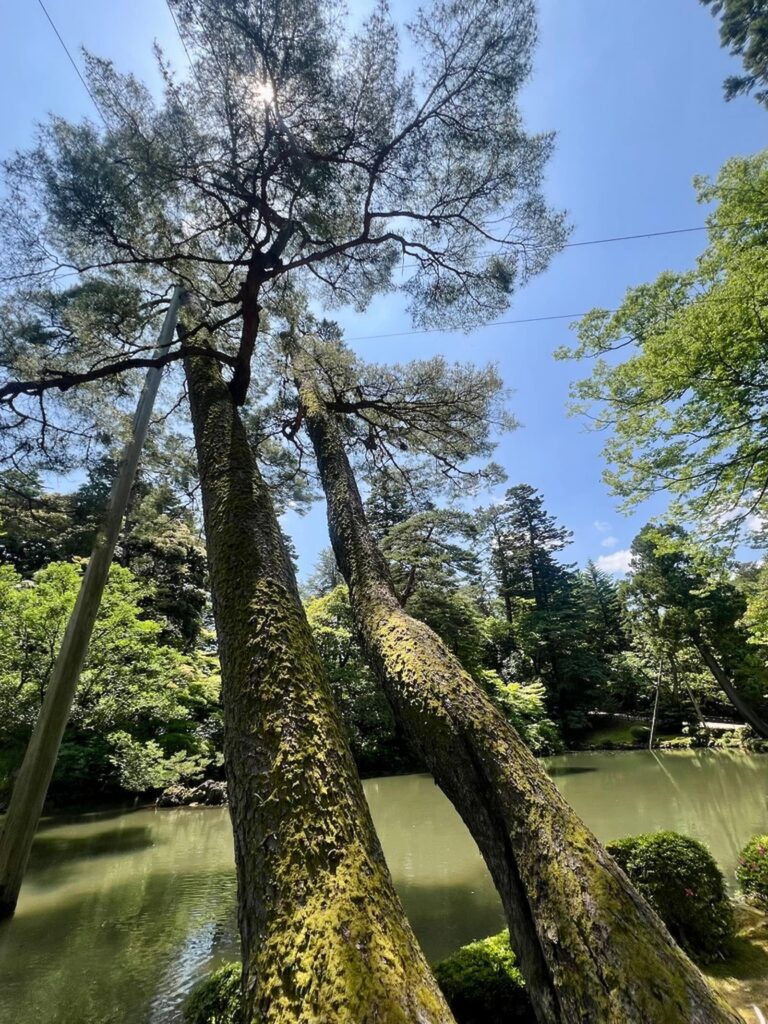
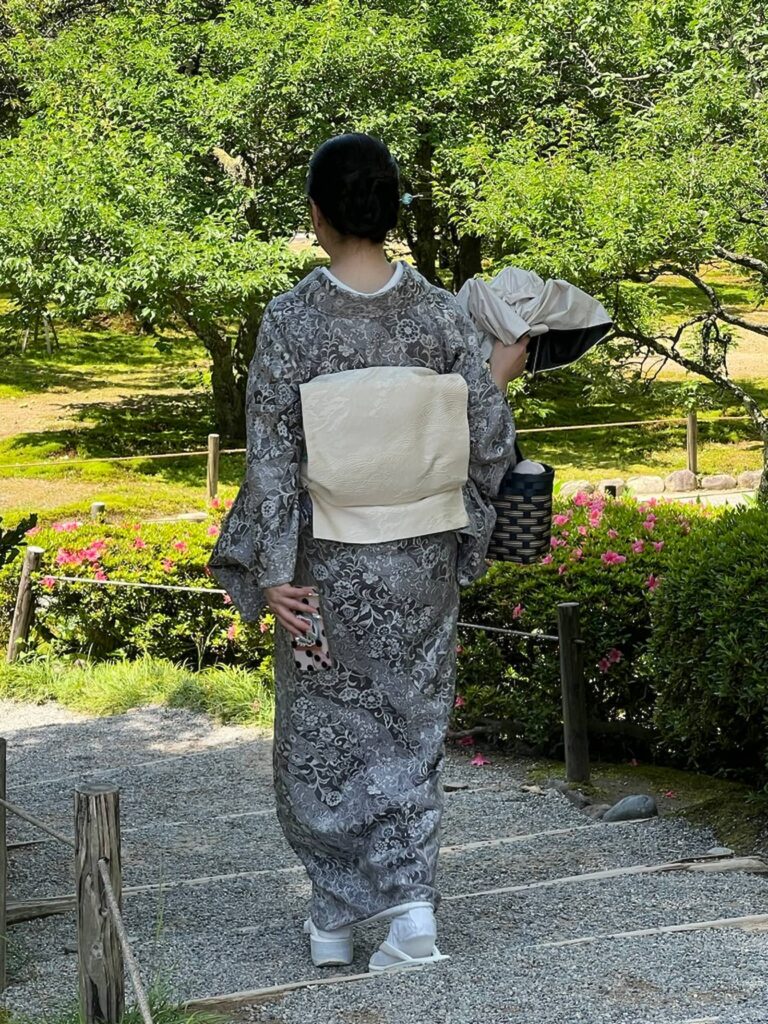
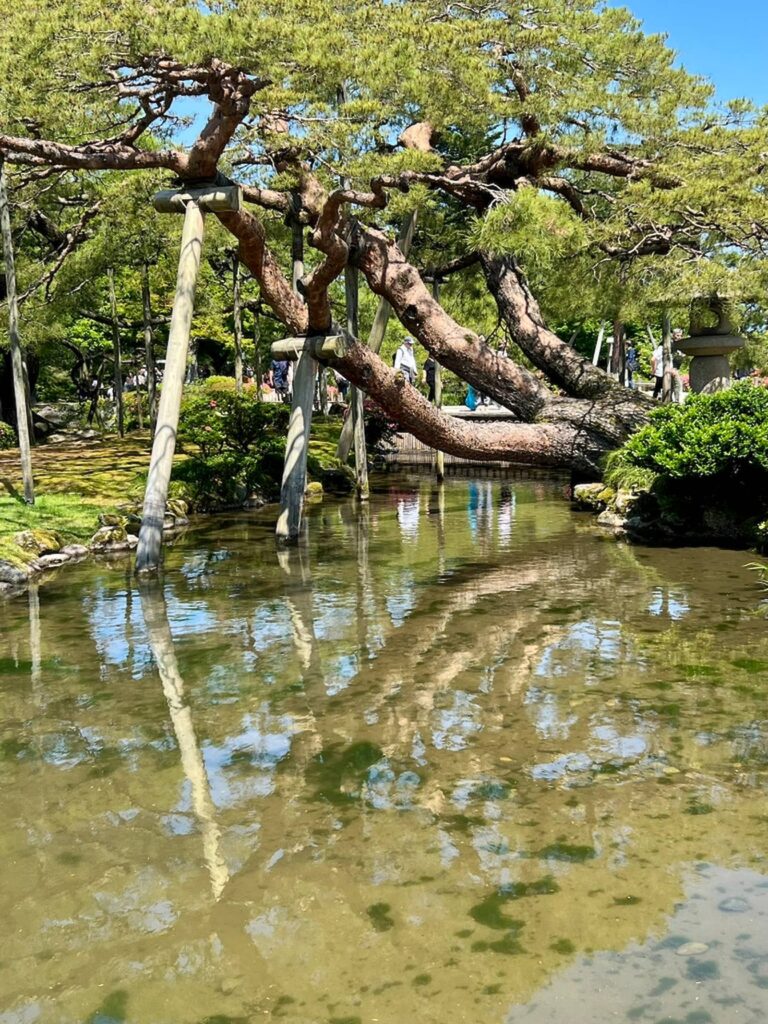
Walking its meandering paths, crossing small bridges over streams, pausing at the edge of the central pond — it is the kind of place that slows your breathing without you even noticing. Seasonal flowers and trees create vistas of delicate cherry blossoms in spring, colorful azaleas and irises in summer, and vibrant red and gold leaves in autumn. Every season brings its own version of the garden. We felt fortunate to see it in ours.
Directly adjacent to Kenrokuen sits Kanazawa Castle, connected by a bridge and offering an entirely different but equally absorbing experience. Where the garden invites quiet contemplation, the castle grounds deliver a vivid sense of the city’s feudal history — the Maeda clan’s power, the strategic architecture, the storied past of a city that was, in its time, second only to Edo in cultural and economic importance. Walking through it felt like reading a history book with your feet.
The Tea Ceremony: Presence as Practice
Of all the experiences Kanazawa offered us — and there were many — the traditional tea ceremony may have been the most quietly profound.
Known as chanoyu or sado — “the way of tea” — the ceremony is in many ways a microcosm of the Japanese concept of omotenashi: looking after guests wholeheartedly. Every gesture carries meaning. Every movement is intentional. The four guiding principles of the tea ceremony are harmony, respect, purity, and tranquility — and once you’re seated in the room, you feel all four of them simultaneously.
Yes, we sat on the floor. On tatami mats, in the traditional seiza position, with our legs tucked beneath us. It is a posture that asks something of you — and in asking, it begins the process of slowing you down.
Before the tea is served, guests are presented with wagashi — traditional Japanese sweets — which balance the natural bitterness of the matcha and prepare the palate for what follows. The host then begins preparing the tea using precise, practiced movements, every gesture carrying meaning, from how the tools are handled to how the tea is whisked. When the bowl is placed before you, the protocol is deliberate: raise the bowl in respect to the host, rotate it slightly so you do not drink from the decorated front, take a few unhurried sips, then set it gently back down.
There is a purpose and a protocol to every single step — and the remarkable thing is that once you surrender to it, you stop thinking about what comes next. You are simply there, in that room, in that moment, drinking tea that someone has prepared for you with tremendous care. It is total cultural immersion. And it is something I will carry with me long after the journey ended.
A Castle Village and Ice Cream Worth the Journey: Day Excursions from Kanazawa
Shirakawa-go: A UNESCO World Heritage Village
From Kanazawa, we set out for Shirakawa-go — a UNESCO World Heritage village nestled deep in the mountains of Gifu Prefecture, and one of the most visually arresting places I have ever stood.
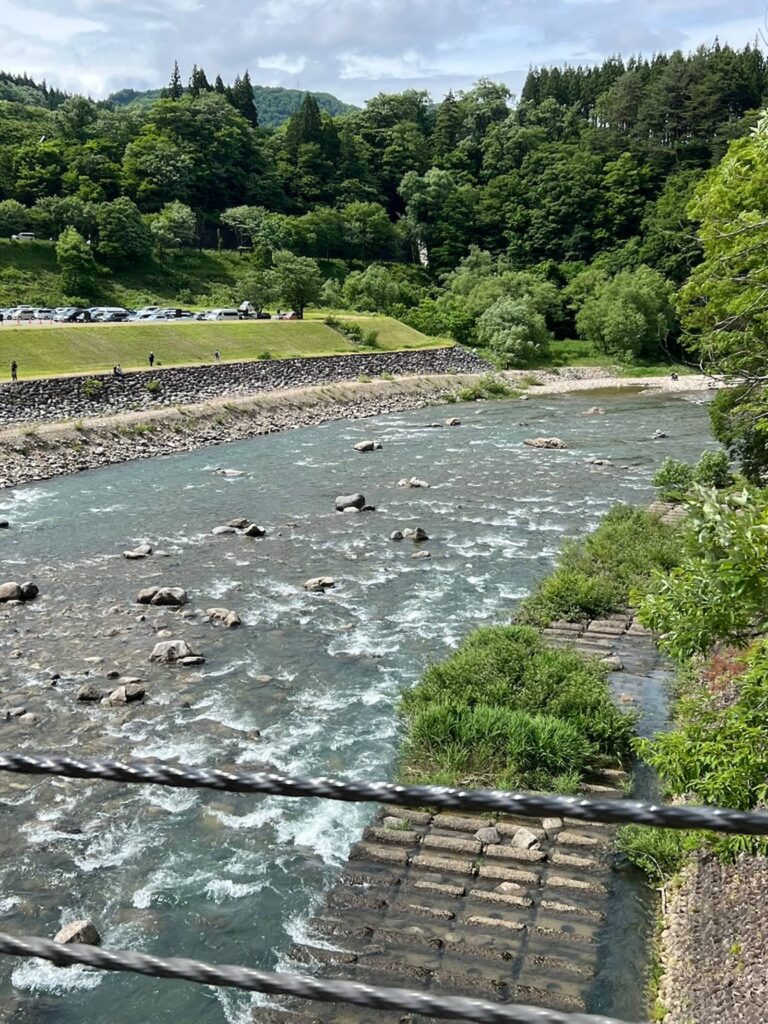
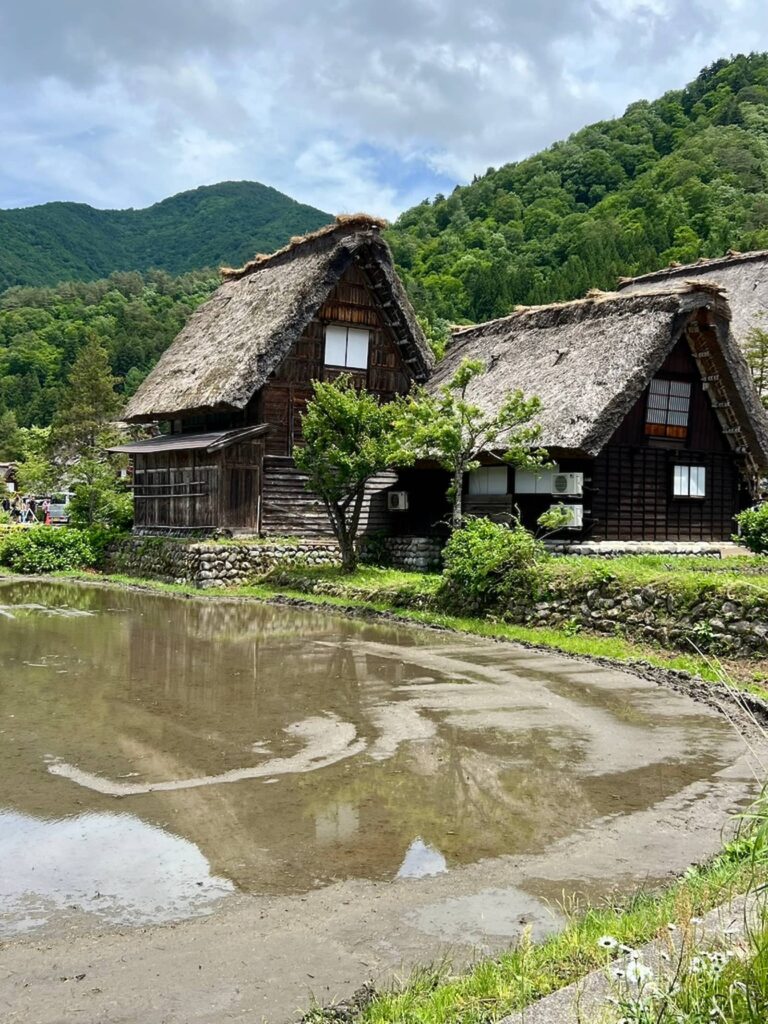
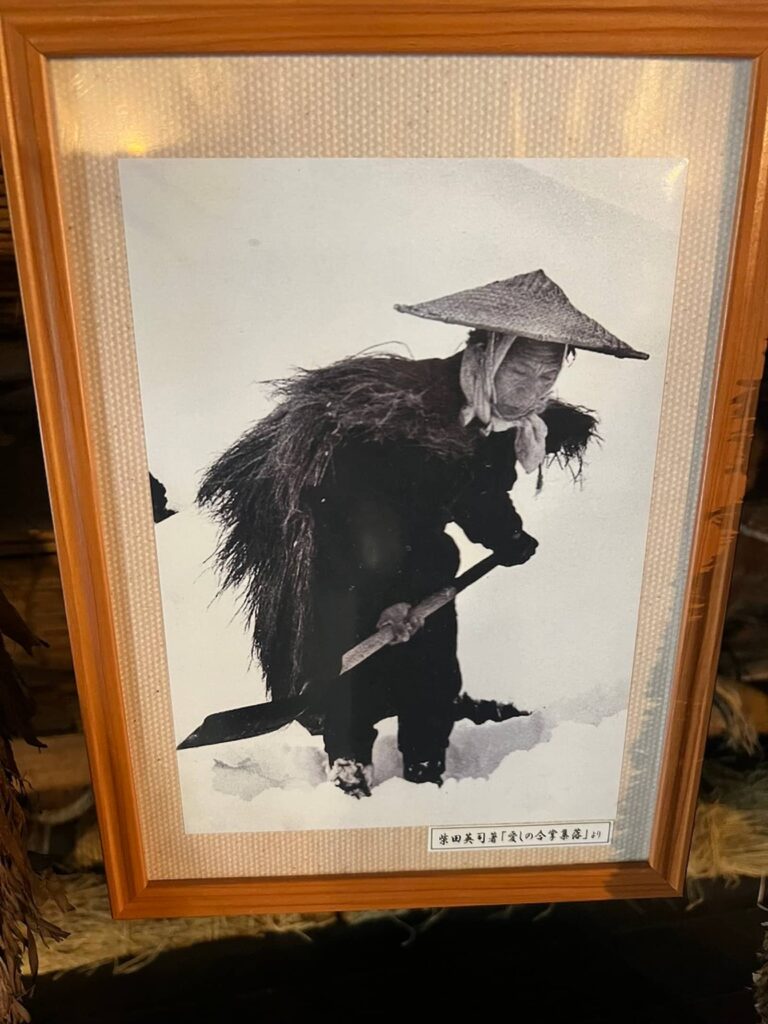
Declared a UNESCO World Heritage Site in 1995, Shirakawa-go is famous for its traditional gassho-zukuri farmhouses, some of which are more than 250 years old. The name gassho-zukuri means “constructed like hands in prayer” — the farmhouses’ steep thatched roofs designed to withstand the enormous snowfalls of the mountain winters. The roofs are built without nails, relying entirely on structural ingenuity passed down through generations, and the attic spaces were historically used for cultivating silkworms.
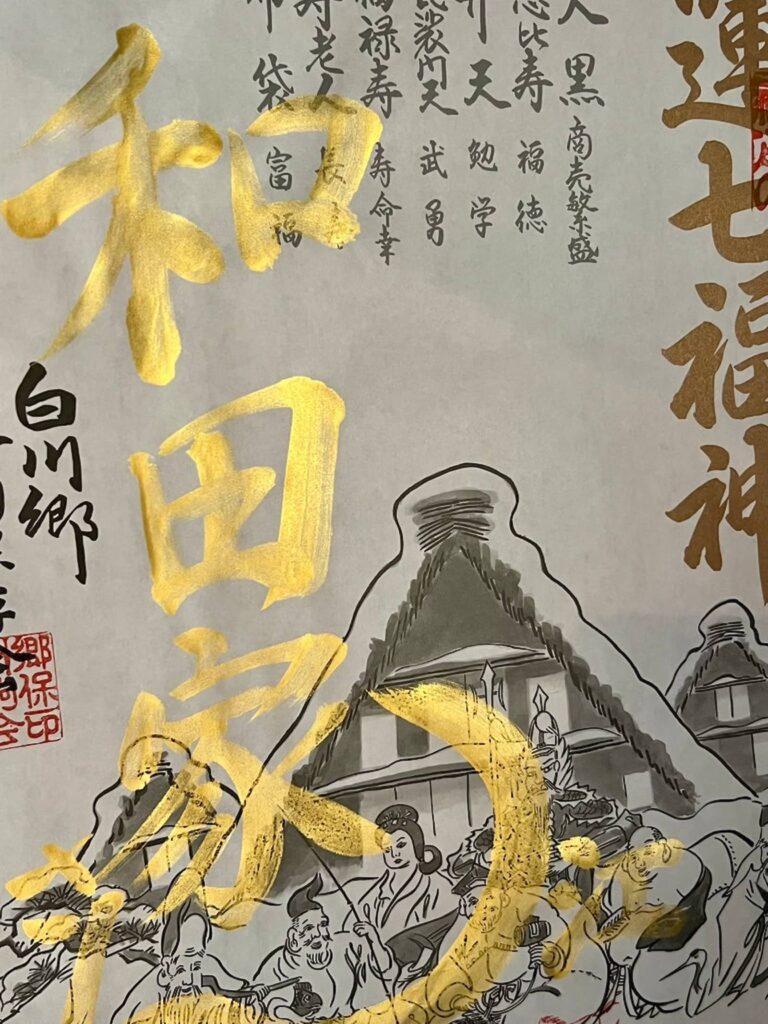
We visited the Wada House — one of the largest and most well-preserved gassho-zukuri houses in the village, offering a fascinating glimpse into the daily life of a wealthy farming family during the Edo period. The Wada family once served as village headmen, and inside you’ll find traditional farming tools, sericulture equipment, and artifacts that illustrate centuries of life in this remote mountain community. We strolled along Ogimachi, the village’s main street, taking in the extraordinary sight of those peaked rooftops rising against the mountain backdrop. It genuinely feels like stepping into another world entirely.
Worth every minute of the journey — and I imagine breathtaking during cherry blossom season.
One more thing: don’t miss the ice cream. Japan’s ice cream is just different — a good different. Richer, more nuanced, and often made with local flavors you won’t find anywhere else. In Shirakawa-go, with those thatched roofs as your backdrop, it tastes even better.
What Kanazawa Gave Me
Kanazawa is the kind of city that rewards curiosity. It doesn’t shout about what it has to offer — it waits for you to find it, and then it gives generously. The gold leaf workshops, the fish market at dawn, the geisha district in the afternoon, the garden and castle, the tea ceremony’s quiet discipline, the mountain village at dusk — it is a city that holds more than a single visit can contain.
If Tsubame reminded me of the beauty of craft and slowness, Kanazawa reminded me of what it looks like when a city decides, collectively, to preserve what matters most about itself. The result is something rare and worth every moment of the journey.
The best souvenirs aren’t always bought in the moment — sometimes they’re discovered later, in the quiet after a trip. Browse the things I travel with, live with, and love.
👉 Visit My ShopMy Store
Freedom Always Blog celebrates slow travel, artisan culture, and the hidden gems that make a journey unforgettable. Missed the beginning? Start with [Tokyo] and continue through [Tsubame] before landing here in Kanazawa. If this post resonated with you, share it with someone who needs a reason to book that flight.
About the Author
Marie Leiter is the voice behind Freedom Always Blog — a slow traveler with a passion for hidden gems, authentic experiences, and life well-lived between two coasts.
Next stop: Kyoto.